A house fire is one of the most frightening things a family or business can go through. Once the fire service has left and everyone is safe, the questions start: what can be saved, who do I call, what happens next and how long will it take? Fire damage restoration is the process of making a property safe, clean and dry again, then putting it back to the way it was before the fire.
This guide explains what happens after a house fire, step by step, from the first few hours to the finished repairs. It covers what you should and should not do yourself, how the restoration process works, how long it usually takes and how insurance fits in. If you are dealing with fire damage in Portsmouth or elsewhere in Hampshire, we hope it helps you feel a little more in control of what comes next.
The first 24 hours after a fire
The first day after a fire is often a blur. These steps help protect you, your property and your insurance claim.
Only go back in when it is safe
Do not re-enter the building until the fire service tells you it is safe. Fire can weaken floors, ceilings and roofs, and there may be hidden hot spots, damaged wiring or a risk of collapse.
Contact your insurer
Call your home or business insurer as soon as you can. Most insurers have a 24 hour claims line, and the sooner they know, the sooner they can approve emergency work such as boarding up and drying.
Secure the property
Broken windows, damaged doors and holes in the roof leave the property open to the weather and to intruders. Emergency boarding up and temporary roof covers are usually the first job.
Record everything
Take photos and videos of every room before anything is moved or thrown away. Keep a list of damaged items and hold on to receipts for any emergency costs, such as somewhere to stay.
Do not start cleaning yourself
It is natural to want to start scrubbing, but household cleaning products and the wrong techniques can set soot into surfaces and make the damage permanent. Wait until the damage has been assessed.
Understanding the different types of fire damage
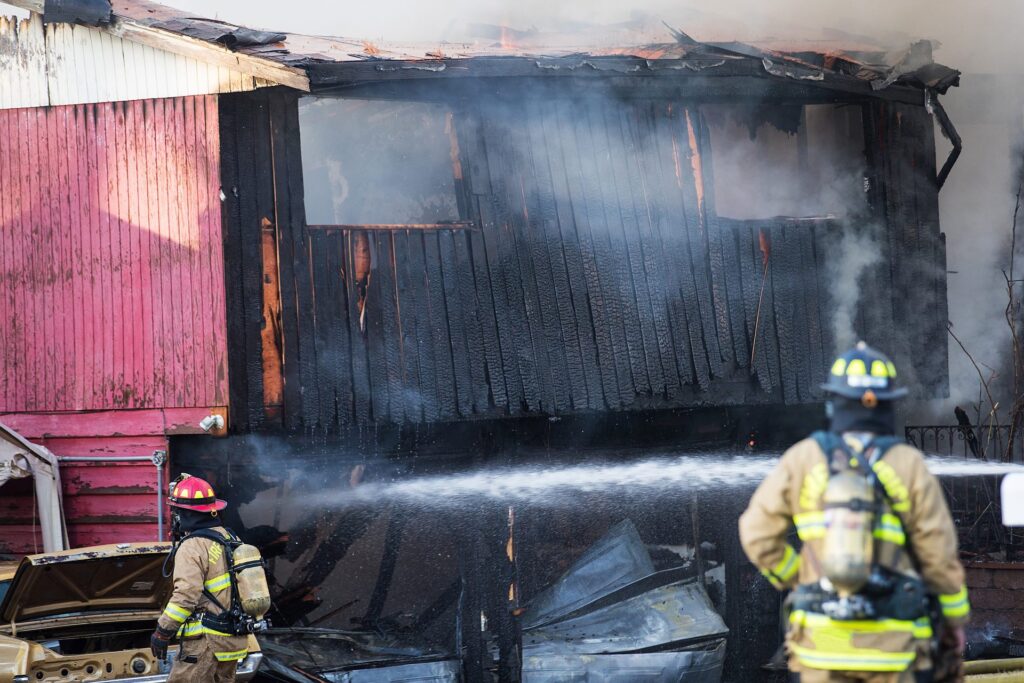
Fire damage is rarely just about what has burned. Most properties have several kinds of damage at once, and each needs a different approach.
- Structural damage: burnt timbers, joists, floors and roof structures that may need replacing.
- Smoke and soot damage: soot spreads well beyond the room where the fire started, coating walls, ceilings, furniture and the inside of cupboards.
- Odour: smoke smells soak into plaster, timber, carpets and soft furnishings and can linger for months if not treated properly.
- Water damage: the water used to put out the fire soaks into floors, walls and ceilings, and can lead to damp and mould if it is not dried properly.
- Corrosion: acidic soot residues can tarnish metal and damage electrical items if left on surfaces.
Because smoke and water travel so far, a small fire in one room can affect the whole property. A proper survey looks at every room, not just the obvious damage.
The fire damage restoration process, step by step
Every job is different, but a professional restoration usually follows these stages.
1. Survey and assessment
A specialist inspects the property to understand the extent of the fire, smoke and water damage, checks for structural safety, and takes moisture readings. This forms the basis of the scope of works and the report for your insurer.
2. Making safe
The property is secured with boarding and temporary roof covers if needed. Unsafe materials are made safe and the site is prepared for the work ahead.
3. Removing debris and damaged materials
Burnt and badly damaged materials are carefully removed. Items that can be saved are separated from those that cannot, and everything is recorded for the insurance claim.
4. Drying out
Water from firefighting has to be removed and the building dried properly using dehumidifiers and air movers. Moisture levels are monitored until the structure is genuinely dry. Skipping this step is one of the most common causes of damp and mould problems later.
5. Cleaning smoke and soot
Different surfaces need different cleaning methods. Specialist techniques remove soot from walls, ceilings, timber and contents without driving it further into the surface. Our guide to smoke and soot damage explains this stage in more detail.
6. Odour removal
Smoke odour is tackled at its source using professional deodorisation, and in some cases by sealing affected surfaces before redecoration so the smell cannot return.
7. Repairs and reinstatement
Once the property is clean and dry, the rebuilding begins: replacing timbers, plastering, electrics, joinery, flooring and decoration. The aim is to return the property to at least the condition it was in before the fire.
8. Final checks and handover
A final inspection makes sure everything has been completed to a high standard, moisture readings are normal and the property is ready to live or work in again.
How long does fire damage restoration take?
There is no single answer, because every fire is different. As a rough guide:
- Minor fires affecting one room, such as a kitchen fire, can often be cleaned and repaired in a few weeks.
- Moderate fires with smoke damage through the house and some structural repairs may take a few months.
- Major fires involving the roof or large parts of the structure can take considerably longer, especially where rebuilding and planning are involved.
Drying times, insurance approvals and the availability of materials all affect the timescale. A good restoration company will give you a realistic programme at the start and keep you updated.
Can you stay in your home during restoration?
It depends on the extent of the damage. After a small, contained fire, it is sometimes possible to stay in part of the property while work goes on. After larger fires, smoke contamination, a lack of power or water, and safety concerns usually mean moving out for a while.
Many home insurance policies include alternative accommodation cover, which pays for somewhere to stay while your home is being restored. Check your policy and speak to your insurer early so this can be arranged quickly.
Fire damage and your insurance claim
Fire is covered by most buildings and contents insurance policies, but the claims process can feel overwhelming at an already difficult time. A few points are worth knowing:
- Report the fire to your insurer as soon as possible.
- Do not throw anything away until your insurer or their loss adjuster says you can.
- Keep receipts for emergency costs, such as boarding up and temporary accommodation.
- Ask for a clear, written scope of works and report from your restoration company.
- Ask your insurer whether you can use a restoration company you choose, and what approval they need first.
Our guide to fire and flood insurance claims explains how a restoration company can support you through the process.
What not to do after a fire
Some well meaning actions can make fire damage worse or cause problems with your claim.
- Do not switch on electrics, heating or appliances until they have been checked.
- Do not try to wash soot off walls, ceilings or soft furnishings with household cleaners.
- Do not eat food that has been exposed to heat, smoke or firefighting water.
- Do not throw away damaged items before they have been recorded for your insurer.
- Do not leave water damage to dry on its own, as it can lead to damp and mould.
Fire damage in rented homes and commercial properties
Fires in rented homes, blocks of flats and commercial premises bring a few extra things to think about.
Landlords and tenants
In a rented home, the landlord’s buildings insurance usually covers the structure, while the tenant’s own contents insurance covers their belongings. Landlords should notify their insurer straight away, keep tenants informed and check whether their policy includes loss of rent cover while the property is uninhabitable.
Flats and shared buildings
In a block of flats, fire and smoke often affect more than one property, as well as shared stairways, roof spaces and service risers. The building’s insurer and managing agent will usually coordinate the claim, and it helps when one restoration company can manage the whole building.
Shops, offices and other businesses
For businesses, getting back up and running quickly is a priority. Restoration can often be phased so that parts of the premises reopen while work continues elsewhere. Business interruption cover, if you have it, may help with lost income while repairs are carried out.
Reducing the risk of another fire
Once your property has been restored, a few simple steps help reduce the risk of it happening again.
- Fit working smoke alarms on every floor and test them monthly.
- Add a heat alarm in the kitchen, where smoke alarms can be set off by cooking.
- Have electrics checked by a qualified electrician, especially in older properties.
- Never leave cooking, candles or heaters unattended.
- Have chimneys and wood burners swept regularly.
- Keep fire doors closed and escape routes clear.
Fire damage restoration at a glance
- First: stay safe, call your insurer, secure the property and record everything.
- Types of damage: structural, smoke and soot, odour, water and corrosion.
- The process: survey, make safe, remove debris, dry out, clean, deodorise, repair and hand over.
- Timescales: from a few weeks for minor fires to several months for major ones.
- Insurance: report early, keep records and ask for a clear scope of works.
Frequently asked questions
Can smoke damaged walls be saved?
Often, yes. Specialist cleaning removes soot from many surfaces, and sealing before redecoration stops stains and smells coming back. Badly damaged plaster may need replacing.
How do you get rid of the smell of smoke?
Smoke odour needs treating at its source. Professional cleaning, deodorisation and sealing affected surfaces are far more effective than air fresheners, which only mask the smell for a short time.
Is fire damage covered by home insurance?
Fire is covered by most standard buildings and contents policies, but the level of cover varies. Check your policy documents and speak to your insurer as soon as possible.
Why does a fire cause water damage?
Firefighters use large amounts of water to put out a fire. That water soaks into floors, walls and ceilings and must be dried out properly to prevent damp and mould.
Who should I call first after a house fire?
Once everyone is safe and the fire service has left, call your insurer. Then contact a specialist restoration company to secure the property and start the assessment.
Fire damage restoration in Portsmouth and Hampshire
PFC Restoration helps homeowners, landlords and businesses across Portsmouth and Hampshire recover after a fire. From securing the property and drying out to smoke cleaning, odour removal and full reinstatement, we handle the whole restoration and work alongside your insurer to keep things moving.
If you need fire damage restoration after a fire at your home or business, get in touch with our team or call us on 07760 660 028. You can also find out more about PFC Restoration and the services we offer.
Share This Story, Choose Your Platform!
About the Author: PFC Restoration