After a fire, the flames often do less damage than the smoke. Even a small kitchen fire can leave a film of soot on every wall and ceiling in the house, and a smell that seems to get into everything. Smoke damage cleaning is a specialist job, because soot behaves very differently from ordinary dirt, and cleaning it the wrong way can make it much harder to remove.
This guide explains why smoke and soot spread so far, the different types of soot, how professionals clean it, how smoke smells are removed and when items can be saved. Whether you have had a small fire, a chimney fire or a fire next door that has filled your home with smoke, it should help you understand what needs to be done.
Why smoke damage spreads so far
Smoke is made up of tiny particles and gases carried by hot air. As the hot air rises and spreads, it pushes smoke through the whole building, into rooms with the doors closed, through gaps around pipes and into loft spaces and wall cavities.
As the smoke cools, the particles settle on surfaces as soot. They tend to collect on cooler surfaces, such as outside walls, windows and the inside of cupboards, and around air movement, such as door frames and ventilation grilles. That is why rooms that were nowhere near the fire can still be badly affected.
Soot is acidic
Soot is not just dirty, it is often acidic. Left on surfaces, it can discolour paintwork, etch glass and tarnish metal over time. The sooner it is cleaned properly, the more can be saved.
Smoke smells soak in
Smoke odour comes from gases and microscopic particles that get into porous materials such as plaster, timber, fabrics, carpets and insulation. Simply cleaning surfaces is often not enough to remove the smell.
The different types of soot
What burned affects the type of soot left behind, and each type needs a different cleaning approach.
- Dry soot: from fast, hot fires burning paper or wood. It is powdery and easier to remove, but it smears easily if wiped.
- Wet or oily soot: from slower, smouldering fires burning plastics, rubber and furniture. It is sticky, smears badly and has a strong smell.
- Protein residue: from kitchen fires where food has burned. It is almost invisible but leaves a yellowish film and a very strong, unpleasant smell.
- Fuel or oil soot: from boiler faults or oil based fires. It is thick, dark and can be difficult to remove.
Identifying the type of soot is the first step in any professional cleaning plan.
Why you should not clean soot yourself
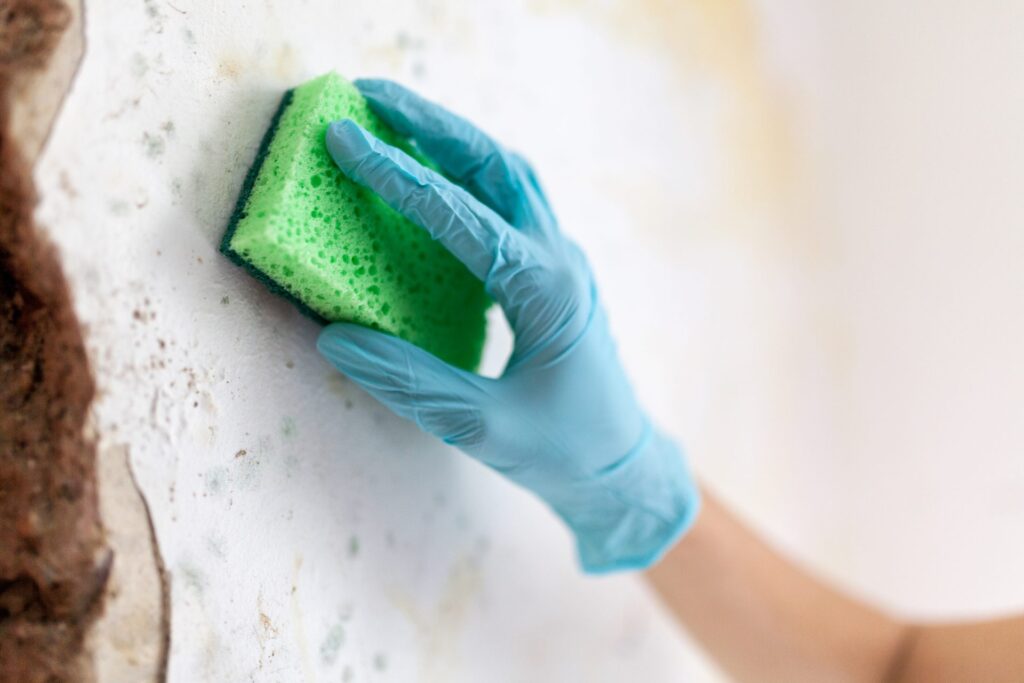
It is tempting to grab a bucket and sponge, but DIY cleaning often makes smoke damage worse.
- Wiping smears soot and pushes it deeper into paint, plaster and fabric.
- Water and household cleaners can react with soot residues and set stains permanently.
- Vacuuming with a normal vacuum can blow fine soot particles back into the air.
- Health risks: soot can contain harmful substances, so breathing it in or getting it on your skin is best avoided.
- Insurance: cleaning before damage is recorded can make your claim harder to prove.
How professional smoke damage cleaning works
A professional clean follows a careful order, working from the least invasive methods to the most.
Assessment
Every room is checked to see how far smoke has travelled, what type of soot is present and which surfaces and contents are affected. This includes hidden areas such as inside cupboards, behind furniture and in the loft.
Dry cleaning first
Loose soot is removed with dry methods, such as specialist sponges and HEPA filtered vacuums, before any liquid is used. This prevents smearing and stops soot being driven into the surface.
Wet cleaning with the right products
Once the loose soot has gone, surfaces are cleaned with products suited to the type of soot and the material underneath, whether that is painted plaster, timber, tiles, glass or metal.
Cleaning contents
Furniture, ornaments, clothing and soft furnishings can often be cleaned and deodorised. Items that cannot be saved are recorded for your insurance claim.
Sealing and redecoration
Where soot has stained plaster or timber, a specialist sealer is applied before redecoration. This locks in any remaining staining and odour so it does not bleed through new paint.
Getting rid of smoke smells
Smoke odour is often the last and most frustrating part of fire damage. Air fresheners and candles only mask it for a few hours. Proper odour removal tackles the source.
Clean the source
Most smoke smell comes from soot residue. Thorough cleaning of every affected surface removes a large part of the odour.
Remove what cannot be saved
Badly affected insulation, carpets, underlay and soft furnishings sometimes hold so much smell that removing them is the only solution.
Professional deodorisation
Specialist equipment and treatments break down odour molecules in the air and in porous materials, reaching places that cleaning cannot.
Seal before you decorate
Sealing affected surfaces before redecorating stops any trapped odour from returning, especially when the heating is turned on and the building warms up.
Smoke damage to electronics and household contents
Smoke affects far more than walls and ceilings. Many of the things inside a home or business need attention too.
Electronics
Televisions, computers and other electrical items draw air through them to keep cool, which means smoke and soot get inside. Acidic soot can corrode circuit boards over time, so electronics should be checked and cleaned by specialists before being switched back on.
Kitchen items and food
Food that has been exposed to smoke, heat or firefighting water should be thrown away, even if it was in a closed cupboard or the fridge. Pots, pans, crockery and cutlery can usually be cleaned thoroughly.
Clothing and soft furnishings
Fabrics hold smoke smells well, but many can be saved with specialist cleaning and deodorisation. Normal washing often does not remove the odour completely and can set stains.
Documents and photographs
Important papers and photos can sometimes be cleaned or restored by specialists. Store them somewhere dry and clean until they can be looked at.
Chimney fires and wood burner smoke damage
Not all smoke damage comes from a house fire. Chimney fires, blocked flues and badly fitted wood burners can push smoke back into a room, leaving soot on walls, ceilings and furnishings even when nothing else has burned.
If you notice soot around a fireplace or stove, a smoky smell when the fire is lit, or black marks on the ceiling above it, stop using it and have the chimney swept and the appliance checked by a qualified engineer. The soot left behind can then be cleaned in the same way as any other smoke damage. Smoke trapped in chimney breasts and loft spaces can also lead to damp staining, so it is worth checking for damp at the same time.
Looking after your health during the clean up
Soot and smoke residues can irritate the lungs, eyes and skin. If you need to go back into a smoke damaged property before it has been cleaned:
- Keep visits short and ventilate the property where it is safe to do so.
- Wear gloves and a properly fitted dust mask.
- Keep children, pets and anyone with breathing problems away until cleaning is complete.
- Wash your hands and change your clothes after leaving the property.
Smoke damage from a fire next door
Smoke does not respect boundaries. In terraced houses, flats and shared buildings, smoke from a neighbouring property can travel through loft spaces, shared walls and ventilation, leaving soot and smells in your home even if there was no fire inside it.
If this happens, record the damage with photos, contact your own insurer and let your landlord or managing agent know if you rent or live in a block. The cleaning process is the same, and acting early gives the best chance of saving surfaces and contents.
How quickly should smoke damage cleaning start?
The sooner, the better. Soot residues start to affect surfaces within hours, and the longer they are left, the harder they are to remove.
- Within hours: plastics and light coloured surfaces can start to discolour, and acidic residues begin to tarnish metal.
- Within days: paintwork and grout can stain permanently, fabrics take on a lasting smell and metal surfaces start to corrode.
- Within weeks: staining often becomes permanent, glass can etch and the cost of restoration rises sharply, with more items needing to be replaced rather than cleaned.
Once the property is safe and your insurer has been told, arranging an assessment quickly gives the best chance of saving surfaces and contents, and keeps the overall cost of the claim down. Where firefighting water has also soaked into the building, drying needs to start at the same time to stop damp and mould developing alongside the smoke damage.
Smoke damage cleaning at a glance
- Why it spreads: hot air carries smoke through the whole building, and soot settles on cooler surfaces.
- Types of soot: dry, wet or oily, protein and fuel based, each cleaned differently.
- Avoid DIY: wiping and household cleaners can set stains and spread soot.
- Professional process: assess, dry clean, wet clean, clean contents, seal and redecorate.
- Odour: clean the source, remove what cannot be saved, deodorise and seal.
Frequently asked questions
How long does smoke damage cleaning take?
It depends on how far the smoke has spread and the type of soot. A single room can take a day or two, while a whole house affected by oily soot can take a week or more, before any redecoration.
Can smoke damaged clothes and furniture be saved?
Often, yes. Many fabrics and furniture items can be professionally cleaned and deodorised. Items that are badly burned or heavily contaminated may need replacing and should be recorded for your insurer.
Will painting over smoke stains cover them?
Not on its own. Stains and smells usually bleed through ordinary paint. Surfaces need cleaning and sealing with a specialist primer before redecoration.
Is smoke damage covered by insurance?
Smoke damage from a fire is usually covered under the fire section of buildings and contents insurance. Check your policy and contact your insurer before starting any cleaning.
Is it safe to stay in a smoke damaged house?
It depends on the level of contamination. Heavy soot and strong smells can affect breathing, especially for children, older people and anyone with asthma. If in doubt, stay elsewhere until the property has been cleaned.
Smoke damage cleaning in Portsmouth and Hampshire
PFC Restoration provides professional smoke and soot cleaning, odour removal and full fire damage restoration for homes and businesses across Portsmouth and Hampshire. We assess every room, clean and deodorise properly, and work with your insurer so your property is returned to the condition it was in before the fire. You can read more about how we support you through fire and flood insurance claims.
If you are dealing with smoke damage, get in touch with our team or call us on 07760 660 028. You can also find out more about PFC Restoration.
Share This Story, Choose Your Platform!
About the Author: PFC Restoration