A leak inside the house is bad enough, but a leak on the pipe that brings water into your property can be sneakier and more expensive. It can run unseen under a driveway, a lawn or a floor slab for weeks, quietly raising your water bill and softening the ground around your foundations. If you suspect that is happening, understanding mains water leak repairs will help you act quickly and avoid paying more than you need to.
At PFC Restoration we find and repair leaks, and deal with the water damage they leave behind, for homes and businesses across Portsmouth and Hampshire. This guide explains how to tell whether you have a mains leak, who is responsible for fixing it, how the repair is carried out and what to do about the damage afterwards.
What is a mains water leak?
Your mains water supply is the pressurised pipe that brings clean water from the water company’s network into your property. A mains leak is a leak on that supply pipe, before the water reaches your taps, your boiler or your appliances. Because the pipe is under pressure all the time, even a small crack or a failed joint can lose a surprising amount of water.
Most mains supply pipes are buried. They run underground from the boundary of your property to a stopcock, usually inside the house near the kitchen, and are often hidden under a garden, a path or a driveway. That is why a mains leak can go unnoticed for a long time.
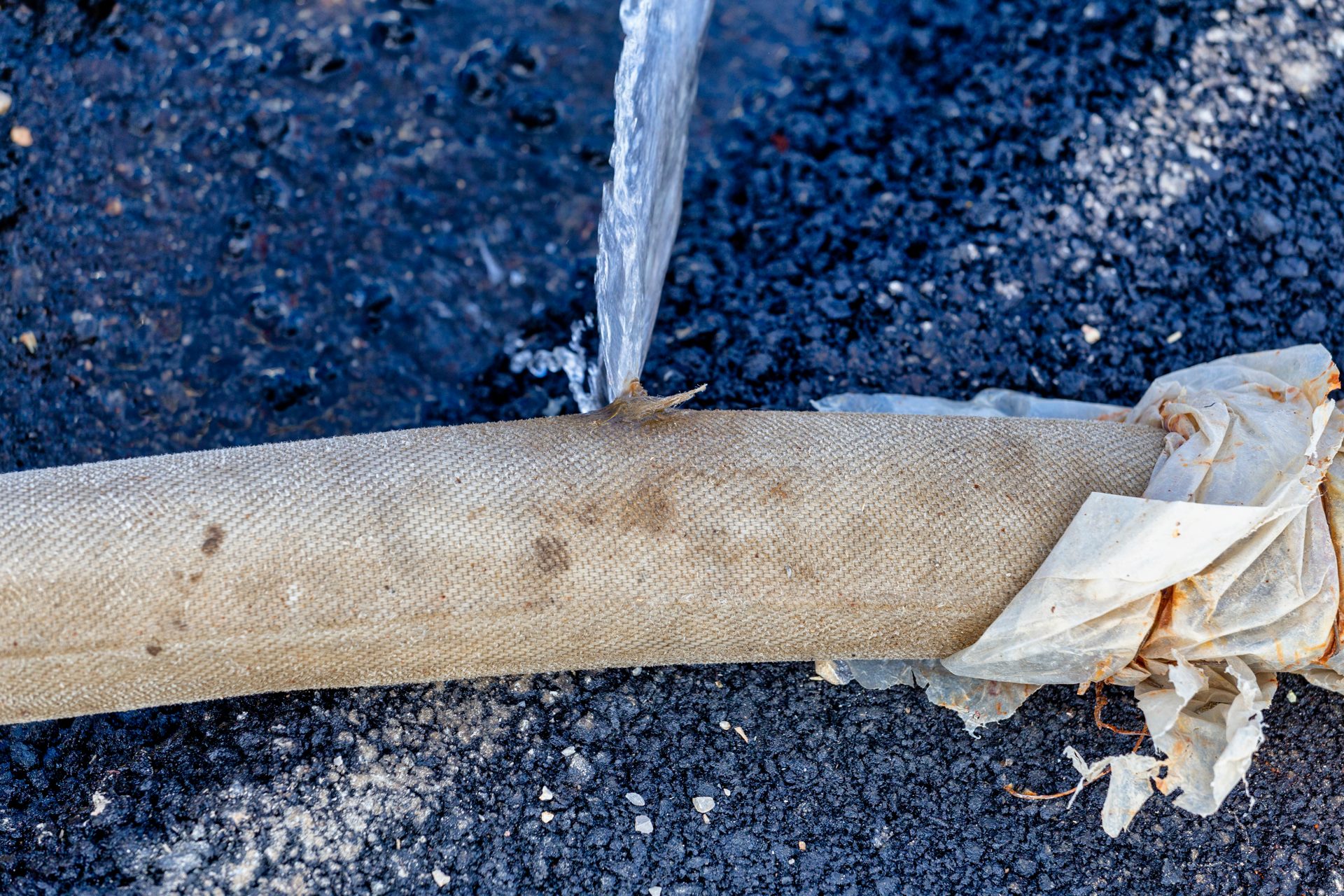
Signs you may need mains water leak repairs
The signs are not always dramatic. Look out for the following.
- A water bill that is higher than usual, with no change in how much water you use.
- Low or fluctuating water pressure throughout the property.
- The sound of running or hissing water when everything is turned off.
- Damp patches, soft spots or a patch of unusually green grass on the lawn or driveway.
- Pooling water, or a wet area that never dries, near the boundary or the property wall.
- Damp or mould on the ground floor, especially on walls near where the supply enters the house.
- A water meter that keeps turning when all taps and appliances are off.
Any one of these can have a different cause, but if you see more than one it is worth investigating at once.
A simple test for a mains leak
There is a quick check you can do yourself. Turn off every tap and make sure that appliances such as the dishwasher and washing machine are not running. Then look at your water meter, which is normally in a chamber near the boundary of your property or inside the house. If the dial or the small leak indicator is moving while nothing is on, water is going somewhere it should not be.
For a more accurate check, note the reading, wait an hour without using any water and then check it again. A change suggests a leak, either on the mains supply or in the pipework inside the property. If the meter is not moving, the issue may be a slow leak inside the house, and a different approach is needed. Our guide to home leak detection in Hampshire explains how those are located.
Who is responsible for mains water leak repairs?
This is one of the most common questions we are asked, and the answer depends on where the leak is. In general, the water company is responsible for the pipe in the street and the section connecting it to the boundary of your property. You, as the owner, are normally responsible for the pipe from that point to your property, which is often called the customer supply pipe.
If the leak is on your section, you will usually need to arrange and pay for the repair. Some water companies offer help, such as a free repair on the first leak or a leak allowance on your bill, but the rules differ from company to company, so it is worth checking with yours. If you are not sure which side the leak is on, the water company can advise, and a leak detection survey can pinpoint it.
It is also worth knowing that if you are a tenant, the responsibility may fall to your landlord. If you rent, tell them as soon as possible and keep a record of when you reported it.
What to do straight away if you find a mains leak
- Turn off the stopcock. It is usually under the kitchen sink or near the point where the pipe enters the house. Turn it clockwise to stop the water.
- Keep taps off and avoid using appliances until the issue has been checked.
- Protect valuables and move furniture, rugs and electrical items away from damp areas.
- Switch off the electrics if water is near sockets or appliances, and do not touch anything that looks unsafe.
- Take photos and notes. Record when you noticed the problem, the meter readings and any damage. This helps with insurance and with the repair.
- Call a professional. A specialist can locate the exact position of the leak without digging up the whole property.
If the leak is serious and water is escaping quickly, the same steps apply as for any burst pipe. Our guide to what to do about a burst water pipe goes through the emergency steps in more detail.
How is a mains leak found?
Digging up a driveway to look for a leak is a last resort, not a first step. A specialist uses non-invasive methods to find the leak first. These can include acoustic equipment that listens for the sound of escaping water, thermal imaging that picks up temperature differences, tracer gas and pressure testing to confirm that a section of pipe is losing pressure.
The aim is to pinpoint the leak to within a small area, so that any excavation is limited to the smallest possible spot. That saves time, money and disruption. We take a closer look at the process in our article about professional leak detection.
How are mains water leak repairs carried out?
The method depends on the position of the leak, the type of pipe and what is above it. There are two main approaches.
Excavation and repair
Once the leak has been located, a small hole is dug to expose the pipe. The damaged section is cut out and replaced, and the pipe is tested before the hole is filled and the surface reinstated. This is the most common repair for a single, localised leak, and it is usually completed in a day or less.
Replacing the pipe
If the pipe is old, corroded or has failed in several places, patching it may only be a temporary answer. In that case, replacing the whole length of supply pipe is often the better long-term choice. This can be done by digging a trench, or in some cases using trenchless methods that pull a new pipe through the ground, which reduces the damage to gardens and driveways.
Modern supply pipes are typically made from blue polyethylene, which is tough, flexible and long-lasting. Older properties may still have lead, galvanised steel or copper pipework, and it is worth asking about the condition of the whole run while the work is being done.
What causes a mains water leak?
Understanding the cause can help to stop it happening again. The most common reasons include:
- Ageing pipes that have corroded or become brittle over time.
- Ground movement, including dry spells and heavy rain, which can crack or shift buried pipes.
- Tree roots growing around or into the pipe.
- Damage from building work, digging or heavy vehicles.
- Poor-quality joints or fittings that have failed.
- Freezing weather, which can split pipes that are not buried deep enough or are poorly insulated.
What happens to the damage from a mains leak?
A mains leak does not just waste water. Over time, it can wash soil away from around foundations, make floors and walls damp and create the perfect conditions for mould. Once the pipe has been repaired, it is important to deal with any water damage, too.
That might mean drying out the affected areas using professional equipment, treating damp and mould and repairing plaster, flooring or other finishes. Left untreated, damp can spread and cause more serious problems, so it is worth having the property checked after the repair, not just the pipe.
Will insurance cover mains water leak repairs?
It depends on your policy. Many buildings policies cover the damage caused by an escape of water, and some cover the cost of finding the leak, which is sometimes called trace and access. The repair of the pipe itself may be covered in some cases, or may be excluded for wear and tear. Some policies, or separate home emergency cover, include cover for underground pipes.
Read your policy carefully, and contact your insurer before you start any work, so you know what is covered. Keep receipts and photographs, because they will support your claim.
How can you reduce the risk of a mains leak?
- Know where your stopcock is, and check that it works freely.
- Check your water meter from time to time, so you spot any unusual changes early.
- Take note of your normal water bill, and look into any sudden rise.
- Keep trees and large shrubs away from the supply pipe route where you can.
- Insulate exposed pipes before winter.
- If your pipe is old, ask a professional about replacing it before it fails.
How much do mains water leak repairs cost?
The cost depends on how deep the pipe is, what the surface is made from and how long a section needs repairing. A simple repair to a single point in a garden is very different from replacing a long run under a block-paved driveway. The most reliable way to find out is to get a leak detected and quoted properly, so you only pay for work that is actually needed.
A leak that is found early is almost always cheaper to put right than one that has been running for months. If you suspect a problem, it is better to check now than to wait for the next bill.
Questions people ask about mains water leak repairs
Can I fix a mains leak myself?
A temporary fix, such as turning off the water, is fine. A permanent repair to a buried supply pipe is a job for a qualified professional, because it involves working with pressurised water, excavations and regulations about materials and fittings.
How long does a repair take?
A straightforward repair can often be completed in a day. A full pipe replacement, or a repair that involves a driveway or a patio, may take longer.
Will my water bill go down?
Once the leak is fixed, your usage should return to normal. Some water companies will also adjust a bill for a leak, so it is worth asking.
Speak to PFC Restoration
If you think you have a mains leak, or you have already found damp or damage that you cannot explain, we are here to help. Contact our team for friendly, practical advice, or take a look at our home page to see everything we do across Portsmouth and Hampshire. The sooner a leak is found, the less it costs to put right.
Share This Story, Choose Your Platform!
About the Author: PFC Restoration